
If North Korea Has Covid Beat, Why Buy 1 Million Face Masks From China? - Financespiders


North Korea imported more than 1 million facial masks and 15,000 pairs of rubber gloves from China in July, shortly before declaring victory over Covid-19, Chinese trade figures show.

AssetsFX

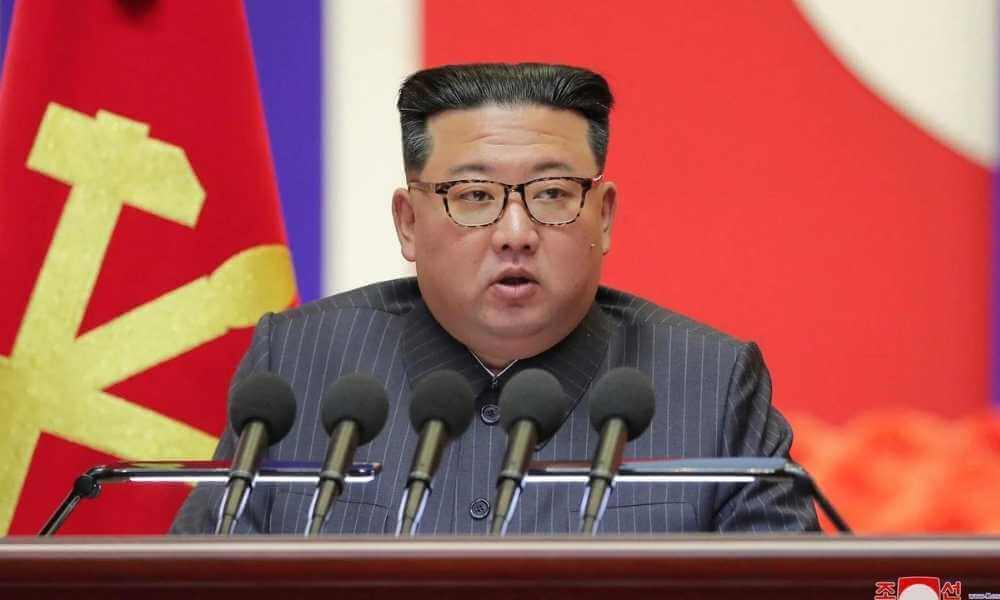
Pyongyang last week declared victory over the coronavirus, ending a little-detailed fight against “fever” cases that had risen to 4.77 million in the country of around 26 million people. It has registered no new such cases since July 29.

Still, China exported 1.23 million facial masks to North Korea in July, worth $44,307, surging from 17,000 the previous month, according to data released by Chinese customs at the weekend.


Keep Pushing Your Profitable Trading With

✅ AssetsFX ✅


From January to July, the last month for which data is available, the North bought more than 11.93 million masks from China, data showed.

North Korea did not import any Covid-19 prevention and control products from China in May, the data showed.
 

China’s overall exports to North Korea surged to $59.74 million in July from $19.05 million in June.

Top exports were semi- or wholly milled rice, cigarettes, disodium carbonate, and smoked sheets of natural rubber.
 

North Korea bought $5.16 million worth of semi- or wholly milled rice, $1.98 million of soybean oil and fractions, and $1.21 million of granulated sugar in July, the Chinese customs data showed.
 

Hot Topics

Russia-Ukraine War: US ‘Set To Send Further $800m In Military Aid To Kyiv’

Ukraine: Preparing For The Worst As Situation At Nuclear Plant ‘Approaches Critical


Taiwan: Will There Be A War Against China? What We Need To Know More
 

China suspended cross-border freight train services with North Korea following consultations due to Covid-19 infections in its border city of Dandong, China’s Foreign Ministry said on April 29. CNN

Comments

Popular posts from this blog

When is the best time to buy cryptocurrency?

It's important to remember that, unlike traditional stock markets, the cryptocurrency market is open 24 hours a day, 7 days a week. Bitcoin can be bought at any time and from anywhere by anyone with an internet connection. A study found that the best days to buy Bitcoin are Sundays and Mondays, when the price of the cryptocurrency is the lowest. The best time to buy BTC is Sunday evening because trading on all cryptocurrency exchanges tends to slow down over the weekend. The big US derivatives company CME Group takes the weekend off. Every day, institutional investors trade more than $500 million worth of bitcoin, which is a big chunk of bitcoin's total volume around the world. When should you buy crypto? Since crypto trades all day, even into the early morning hours (no matter where you live), it can be hard to time your trades to a certain time of day. But if you look at data from a few months, you can see a few very broad trends. Trading for Bitcoin (CRYPTO: BTC), Ether (CRY...

Bitcoin mining stocks surge alongside the broader market as investors anticipate a less aggressive Federal Reserve.

In anticipation of a highly anticipated U.S. CPI report later this week, the BTC price reached its highest level in three weeks. Shares of publicly traded Bitcoin BTC tickers down $17,219 miners surged on January 9 as traders flocked to equity markets in anticipation that the Federal Reserve of the United States will soon be able to ease its aggressive fight against inflation. During intraday trading, Bitcoin mining stocks Riot Blockchain (RIOT), Hut8 (HUT), Bitfarms (BITF), Marathon Digital Holdings (MARA), and others posted double-digit percentage gains. The rally coincided with a broad uptick in equity markets, with the large-cap S&P 500 Index increasing by 1% and the technology-focused Nasdaq increasing by 2% before paring gains. The U.S. Consumer Price Index report due out later this week is anticipated to show a continuation of the moderation in price pressures. The Labor Department reported on January 7 that job creation and wage growth slowed in December, indicating that th...

Once again, Argentina's World Cup falls during a period of high inflation

According to Bloomberg, yearly inflation in Argentina is anticipated to exceed 99% this month and economists anticipate it to approach three figures soon as the team gets ready for Sunday's World Cup final. Inflation in 1986, the year Diego Maradona led the Albiceleste to victory, averaged 116%. Data and surveys from the central bank show that the rate was 176% in 1978, the year that Argentina won the game it hosted. Lionel Messi, who was born in 1987, a year after Argentina won the World Cup, and is viewed by the supporters as Maradona's successor, will play in his final World Cup match against France. A nation once again experiencing tough economic times has been pleased by the team's run to the final match, which was motivated by their talisman and involved them avoiding early elimination and posting five straight victories. This country's consistent economic strength, nevertheless, does not necessarily predict its success at the World Cup. The team saw a hyperinflat...